
Choose Yourself Now, or Meet the Lesson Again Later
Updated: Sep 9
What happens when healing changes what you can tolerate, but the relationships around you still expect the old version of you?

MHM Music Vibe
Curated by Juice Brown aka Radio Roxanne
Press play if you want the room to feel the way this piece felt while I was writing it.
I almost didn't publish this.
It's not because I don't believe what I wrote. I do.
But after I finished the draft, something strange happened. I read it one more time (okay, a few more times), closed my laptop, and suddenly it felt like it was too much. Like maybe I was talking about myself too much. I was worried that some parts might have been repeated, maybe nobody actually cared about these stories, and maybe I should pull some of myself out of it.
But how many times have I leaned into this kind of questioning and shrinking because of what my childhood trained into me?
I've noticed I do this whenever I write from my own life rather than from my professional knowledge alone. That is when the 'imaginary audience' shows up. They don't have faces, but they always seem to have opinions. I start wondering if I'm taking up too much space, saying too much, or making too much of experiences that should've stayed private.
I hear the echo of that familiar instruction: "Don't go telling what goes on in this house." And somehow, that instruction traveled. It did not stay in my childhood home. It followed me into writing, relationships, family conversations, and moments when I had something true to say (and I would still say it most of the time), but I still wondered if I was allowed to say it.
Uuuugh!
Sometimes I wonder how much further along I would be if I had not inherited those guardrails, how much more I would have said, how much more I would have trusted my own voice, and how many people who needed language for their own experience might have found it sooner if I had not been busy asking for permission no one even had the authority to give me!
That said, it's funny how healing works.
I can sit across from a client and remind them to choose themselves. I can remind them that they don't need permission to stop returning to places where they aren't considered. But when I'm the one choosing myself out loud, again and again, an old part of me still wonders if I need to earn the right to tell my own story first.
That raises the question: how do you actually earn the right to take up space?
The only answer I can assume, at this big age, is simply being born, living through my experiences, and choosing to share because I want to.
'Dassit.
No prerequisite required.
Maybe that's what this essay is really about. Not just choosing yourself, but choosing yourself without first convincing an imaginary audience that your experience deserves to be heard in the first place. Like, who am I trying to convince here? Because if I'm honest, I think I've spent a lot of my life auditioning.
Not just in my writing, but in rooms with family, conversations, and relationships where I was trying to explain myself clearly enough, be reasonable enough, understanding enough, useful enough, hoping that if I got it just right, maybe I'd finally be received without having to jump through hoops first. My hope was that I'd simply be received because my thoughts and feelings mattered to someone besides myself.
I don't necessarily live in that space anymore, but the remnants of the past still peek through. I don't know if that will ever stop completely. So maybe publishing this is part of me freeing myself from old narratives that still try to silence me.
This is part of my emotional liberation, so fuggit. Here goes...
Healing changes how certain relationships feel...
I've noticed that healing has changed how I experience certain relationships. Some things I used to move around or explain away now sit with me longer. I can feel when I'm being pulled back into a role rather than being met as a person, and that realization has been uncomfortable because the role is familiar. I knew how to be the encourager. I knew how to be steady. I knew how to listen, offer perspective, help someone make sense of themselves, and still go home quietly carrying my own stuff. What I did not always know how to do was notice when the relationship only had room for that dynamic. They took up space and accepted my cheerleading, while I shrank into usefulness rather than being met with equal curiosity and consideration.

That is the part I keep returning to. How many relationships worked because I knew how to become useful inside of them? How many people knew to call when they needed comfort, clarity, advice, encouragement, or a place to pour their confusion, but did not really know how to call when there was nothing to ask of me? I have been thinking about the difference between being valued and being needed. They can feel similar for a while, especially when being needed has been one of the main ways you learned to belong. Somebody trusts your opinion. Somebody wants your voice in the room. That can feel like closeness until you realize the connection gets quiet (or combative) when your own story or your needs enter the space.
Some people didn't notice I was leaving the role...
I think some people do not notice you are leaving the role because, to them, the role still exists as long as they can reach for it.

I think about this with a cousin I used to be close to. There were times she came to be with me after a couple of surgeries I've had in the last few years, and on paper, I guess that could sound like she was there for me. But the truth is, I paid for her round-trip travel both times; I made sure she had what she needed; I asked what she wanted on the grocery list; I bought her cigarettes; and I even made sure she had a little pocket money for the bus ride home. She did not have to pay for anything. And honestly, I did not need much. She brought me food and drinks from the kitchen, she swept and tidied up a bit, and I appreciated that. I am not trying to pretend she did nothing.
But there was still this strange feeling around it, like the story of her "being there for me" somehow left out all the ways I was still making sure she was comfortable while I was the one recovering. Not that she didn't help. She did. It's not that I couldn't appreciate what she offered. I could. It was the way the story kept turning into me owing something, as if her presence erased everything I had done to make that presence possible in the first place.
Several months after recovering from my last surgery, she called me for advice.
I gave it to her straight, the way I often do, which meant holding her behavior accountable — not just soothing her about it. She did NOT like that. She started cutting me off, mid-sentence, over and over, which is a pet peeve of mine on a good day. I told her to stop cutting me off. And she flipped it — she told me I was the one cutting HER off, by telling her not to cut me off! Then she hung up in my face.
I let that be that.
She called and texted me days and weeks later, acting as if nothing happened. I didn't answer, nor did I respond. It wasn't out of spite; I simply wasn't available for a conversation that would pretend the offensive one didn't happen. I wasn't going to shrink or erase myself just to make it comfortable to go back to the way things were before the offense.
One day, she texted me about her upcoming surgery. I sent a text. I wanted it to go well. I wished her a speedy recovery. That was the extent of my love and concern, which never ceased to exist. However, it wasn't the same level of availability she was used to, and I wasn't confused by the difference, even if she was.
Clearly, she wanted more than the text. That's when the gossip started — telling my aunt she was there for me for my surgeries, but I wasn't there for hers. Conveniently missing: the text I sent. Conveniently missing: any apology for asking me for advice, refusing to hear it, and hanging up on me. And for good measure, when she got around to explaining why I'd raised my voice at her for repeatedly talking over me, she told people I was drunk. Not disrespected. Not talked over. Drunk. She is always the victim in somebody's story, I swear.
Then there was my aunt, who brought the gossip to me but brushed me off when I tried to address it. She called me the next day like nothing had happened. I wasn't available for that, because I'd already noticed this same aunt knew exactly how to reach for me when she wanted to talk about herself incessantly. But when I tried to talk about something that affected me, suddenly there was nowhere for that conversation to land.
That is where the old role got very clear. I could be contacted when I was useful. I could be leaned on when someone needed to be heard. I could be expected to understand, hold space, make room, and not make things too uncomfortable. But when I needed honesty, repair, or even a direct conversation, the energy changed. I don't say any of this to paint myself as the one who never falters, because baby, if I get angry enough after repeated disrespect, it's UP — but that's not my default setting.
My anger shows me that I cared about those relationships and myself. I still do. My care was real. My attention was real. My desire to help people feel less alone was real. But my humanity was real too, and I think I spent a lot of time acting as if my ability to understand everyone else meant I did not need to be understood in return.
It was over a year before I heard from my cousin again. She called from a number I didn't recognize, and I answered — not because I was making an exception for her, but because I genuinely didn't know it was her. She said she was surprised I picked up, and that she was genuinely calling to check on me because my mother had passed. She also said she missed me, somewhere in between telling me about her own life and her own woes. She checked on me a couple more times after that, and then it finally hit me: this wasn't concern. This was re-recruitment into the role I no longer occupied.
The last time she called, she said, "I need you, cuz!" I was silent. Then she said, "Well, how are you doing?" I answered her truthfully — told her I was up and down, considering the grief I was carrying over my mom's passing. No compassion was sent back towards me. Instead, it turned into an invitation for her to explain why she needed me, what she'd been going through, and to ask for my advice. See the irony in that?
The more she talked, the clearer it got that what she missed wasn't me, the whole person. It was my kindness. My warmth. My ear. The version of me that shows up when something's wrong and just listens, no accounting required. She wasn't reaching for a relationship. She was reaching for a resource that used to be free, and she wanted it back at my expense, same as always.
And here's the thing — I noticed another pattern, and it wasn't even about us. It was her own life. Same complaints, same mistakes, same experiences, year after year. I'd have to sit there and listen to a cycle SHE was running in her own life, on repeat, with no growth, no accountability, no implementation of the advice she'd already been given, and nothing different about the story except the date. I am tired of being the ear for a rerun.
I hadn't spoken to my aunt in over a year either, not until my mom passed recently. And when we did talk, she was exactly the same too — still only able to talk about herself or other people. There was no genuine curiosity about me. "How are you?" was only a conversation starter. Omg. Same woman, different year, zero change.
I'm keeping my distance from both of them because even a brief reconnection with either one was repulsive to my nervous system. The energy didn't align with my new normal, and I've stopped pretending it should just because we share blood or history.
This is me paying attention to myself. If I ignored that again, I'd be right back in the old role — invisible, as if my only function were to care for how everyone else feels. I'm listening more intently now, and I will not choose anyone over myself again. Hopefully.
Family often writes the first version of the role...
Family can teach the role of being a function before we have language for it. You learn who gets space, who gets protected, who gets explanations, who gets dismissed, who is expected to know better, who is allowed to fall apart, and who is expected to hold the room together even when they are hurting.
Sometimes the role becomes so familiar that you don't even recognize it as a role. It starts to feel like your essence or your personality. If you've ever felt like "the strong one," "the mature one," "the one who gets it," or "the one who can handle it," people may even praise you for it. That praise can make the pattern harder to question because it sounds like love. It sounds like admiration. And maybe they do see something good in you. The problem is that they only see that part, not your full humanity.
Compassion cannot be where my needs disappear...
As I've continued to heal, I've been forced to sit with how often I tried to make myself easier to keep. I would explain more than I needed to. I would soften my feelings before I shared them, depending on who I was sharing them with. I would try to understand the other person's limitations before I let myself fully feel the impact of what happened, especially if harm was involved. I could make a whole emotional case for why somebody could not show up well, and somehow that became a reason for me to stay in a dynamic that kept asking me to expect less. I called it empathy. Sometimes it was. Other times, it was self-abandonment, which I didn't have language for at the time, but it felt off, wrong, or weird.
That's a hard thing to admit because I value compassion. I didn't want to become someone with no patience for people's humanity. I didn't want to confuse boundaries with punishment or healing with superiority. I knew people were imperfect. Hell, I know I am imperfect. I knew relationships required grace, repair, awkward conversations, and sometimes a little time for people to understand each other. But I am also learning that grace should not require me to keep shrinking the truth of my own experience to be cared for equally. Compassion could not keep being the place where my needs disappeared.
The old role still knows how to call my name...
This is where the crossroads keeps showing up for me. There is the old way, the familiar way, the way where I can return to being who certain people know how to handle. I can become the encourager again without needing encouragement. I can offer insight without asking for care. I can make room for someone's pain while folding mine into a smaller shape. I know how to do that. I have done it many times. Hell, I did it most of my life!

Part of the old way was believing that if I found the right words, I could create the right outcome. If I explained it calmly enough, fairly enough, softly enough, thoroughly enough, then maybe they would understand. That old impulse still tries to rise up in me. It's familiar, and it makes me feel like I am doing something responsible. But lately I keep asking myself what I am trying to prove when the pattern has already shown itself numerous times.
The problem is I do not feel the same way inside that system of dysfunction anymore. It doesn't serve me to abandon myself. My body alerts me immediately now, and I will never ignore my discomfort again.
Healing changes what you can tolerate.
That is one of the most inconvenient truths I know right now. It's not always a clean, empowering feeling. Sometimes it's sad, angering, annoying, and sometimes it makes me miss the version of myself who could move through certain things without naming them. There is a strange grief in realizing I cannot go back to being who I was before I knew better.
Once I started recognizing the pattern in real time, I could no longer pretend I was confused. Sometimes the issue was never that I failed to explain myself well enough. Sometimes the issue is that the relationship only works when I keep translating my pain into something the other person does not have to take seriously. If I have to consistently shrink myself to remain in a relationship with you, the relationship is not working, and it's not worth my time. I know that now, and no one can convince me otherwise.
As the old folks say, "an even swap ain't no swindle." If a relationship is not mutually beneficial, I have no business being in it. I'm not saying we have to go "tit-for-tat," but I am saying I must benefit from the relationship in real, tangible ways, where I am not the only one exerting effort, care, and curiosity. TF!?
Familiarity tricked me into believing there was unfinished business...
I have experienced this familiarity in family patterns, friendships, and romantic connections. Someone could return with history, memory, tenderness, or language that touched a version of me that still wanted to believe the relationship could become what I once hoped it would be. Someone could know things about me and still not know how to hold me. Someone could remember what I like and still not be safe for the person I was becoming.
That is not easy to accept because familiarity can feel like evidence, or better yet, proof. It made me wonder if maybe the lesson was unfinished. Maybe there was something else to say. Maybe there is some better version of the conversation that would finally make everything land differently. But, NAH. I finally realized I had to accept what I was experiencing and witnessing without trying to rebrand it as something else. The truth was, I was not met and could not be met fully without shrinking myself or my needs to continue those relationships. That lets me know those relationships were misaligned.
Choosing myself became a daily discomfort...
That is where choosing myself became less of a 'slogan' and more of a daily practice of discomfort. It meant I had to stop using understanding as a reason to keep re-entering dynamics that left me alone. It meant I had to accept that I could care about someone and still know the relationship doesn't have the capacity to meet me. It meant I had to stop treating potential as proof. It meant I had to trust the information I already had and witnessed, even when my feelings were still catching up.
It meant distancing myself from people I loved and putting myself first for the first time in my adult life, which also made me look like an asshole to those whom I cared about (over myself) for quite some time. The shift was challenging and also freeing. I couldn't figure out how to care for myself in a way that didn't neglect others because I never had before. It was weird, strange, and uncomfortable at first, and it felt like I was doing something wrong because it was new.
BUT, it birthed a person who expected more from relationships and could no longer be emotionally manipulated back into the past behavior of being overly self-sacrificing to my own detriment. That said, I started leaving people where they were. I no longer tried to fix, overexert, or overanalyze connections. If it felt imbalanced, I paid attention to that and acted accordingly.
The lonely stretch made room...
Letting go of people who could not reciprocate left space in my life, and at first that space did not feel good or noble. It felt quiet. It felt uncertain. It made me wonder if I had misread things or expected too much. I think that's part of why people so frequently go back to relationships that don't work. The old role may hurt, but it was something I knew. It gave me a place to stand and a place to belong. Being useful gave me an identity. When I stopped offering myself in the same way, I had to meet parts of myself I had not spent much time with. I had to learn who I was when nobody needed my advice, my comfort, my insight, my emotional labor, or my ability to overfunction to make sense of those connections.
The lonely stretch became necessary for me. I needed time to be with myself without immediately turning myself into a resource. I needed to learn what my own life felt like when I was not constantly responding to someone else's needs. I needed to find out what I wanted, what I missed, what I enjoyed, what I avoided, and what I had been too busy carrying to notice. It was uncomfortable AF, but it was also honest and liberating.
Looking back, I can see how that space made room for relationships that feel more mutual now. Truth is, I didn't know how to function in relationships where people didn't need me to disappear to be a part of the dynamic. I literally had to be vulnerable in a way I wasn't used to. I had to show up in a way where reciprocity is the norm and not the exception.
Some people made reciprocity feel simple...
I am grateful for the connections I have now. I am grateful for people I can laugh with and cry with, people I admire and respect, people who not only know me as the one who gives language to the hard thing, but also as a person who needs and desires care and reciprocation.
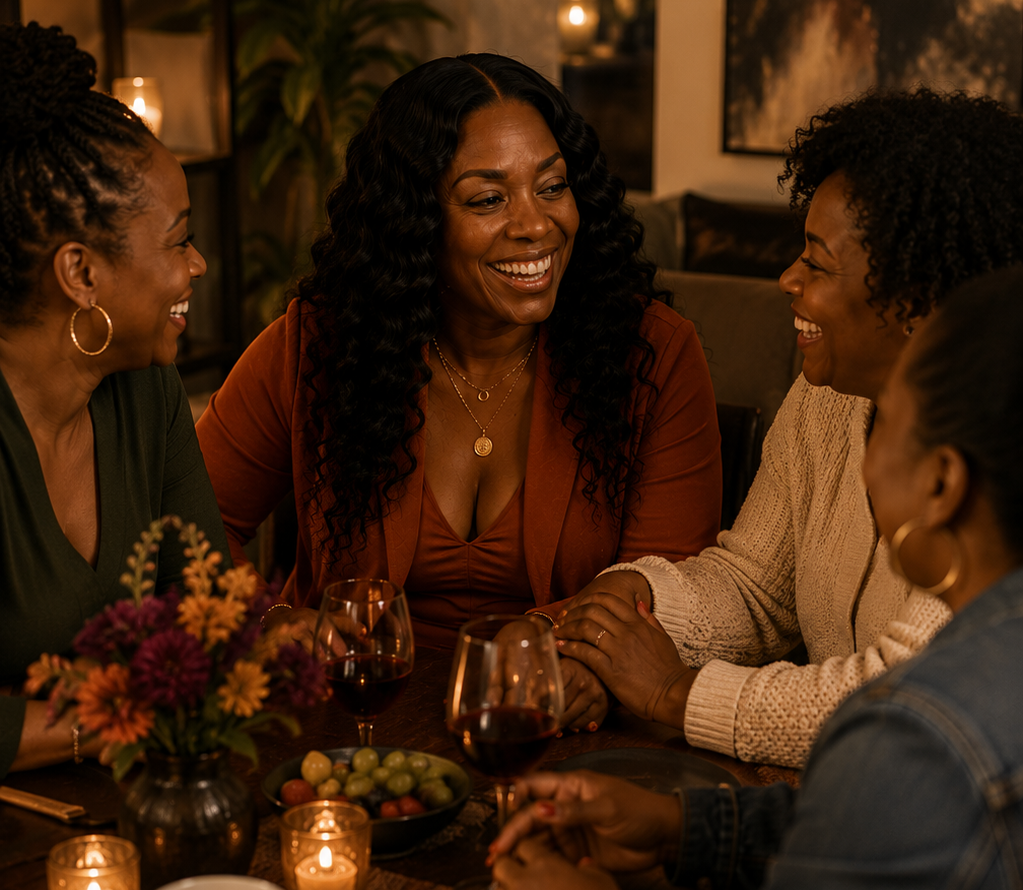
Some people make care feel simple. They call, they check in, and I don't have to perform to be considered, nor do I have to disappear to stay connected.
There is something deeply grounding about being around people who can receive your strength without assuming you do not need tenderness, people who can celebrate you without consuming you or comparing themselves to you, and people who can sit with your joy and your sadness without making either one inconvenient. Those kinds of connection have helped me understand that reciprocity does not have to feel like shrinking or begging. It can feel simple. It can feel natural. It can feel like both people are allowed to be human at the same damn time!
I respect the version of me who survived being a function...
Surviving being merely seen as a function has changed the way I look at older dynamics. Some relationships required me to be less aware than I am now. Some required me to keep performing a version of myself who could survive being unseen yet still show up for others as if I didn't have needs. Some were built during seasons when I thought being needed was the same as being loved well.
While I do not want to shame myself for that, I understand that I was doing what I knew how to do. The version of me who encouraged, held space for, explained nuance, and kept going despite needing reciprocation and not getting it was trying to stay connected. She was used to performing to belong. She was used to making a life out of the tools she had at the time. I respect her for that. And she wasn't always graceful about it, either — sometimes my patience ran out, and she said the honest thing loudly instead of kindly. I don't fault her for that. Silence and softness were never the whole story, even back then.
However, I don't want to keep making her do the work she felt was necessary to be considered and cared for. Her kindness and empathy aren't a currency she has to overshare to be viewed as worthy of basic human kindness, consideration, and decency.
I'm tired of meeting the same lesson...
I kept circling this same lesson, over and over, until I realized I had two options: choose myself now, while the discomfort is still manageable, or meet the lesson again later, in a much louder, more uncomfortable way. Either way, discomfort was coming — so why not choose myself and see what a different outcome could look like this time? Patterns tend to repeat when they remain unquestioned. When I ignore what I know, I usually end up back in some version of the same ache. Different person, different setting, same feeling. The feeling of being useful but unseen, needed but not considered, or explaining my humanity to someone who prefers my function.
I am tired of meeting that lesson! Are you?
I am learning to pay attention to my discomfort sooner rather than explain it away.
I am learning that guilt does not always mean I am doing something wrong. Sometimes guilt means I am being guilt-tripped for stepping out of a role that kept me connected to people who benefited from my self-abandonment.
I am learning that loneliness is not always a sign that I made the wrong choice. Sometimes it is the space where my life is rearranging around the most authentic version of me.
I am learning that missing someone does not always mean I should go back. It may only mean that the relationship mattered to me, and I am allowed to grieve what it was without returning to the dynamic that cost me too much.
Every experience has been part of the way. The people who could not reciprocate, family patterns that showed me where the role began, friendships that taught me the difference between being loved and being used as emotional support or emotional cheerleading, romantic connections that showed me where I was still tempted to negotiate my clarity and needs, lonely stretches that helped me meet myself without the noise, and newer friendships that remind me mutual care is possible.
I realize I do not have to pretend any of my experiences were a waste of time just because most of them were emotionally hurtful (and sometimes harmful). All of my experiences helped me own myself in a way that allows me to make decisions that are best for ME, because who else is going to do that for me?
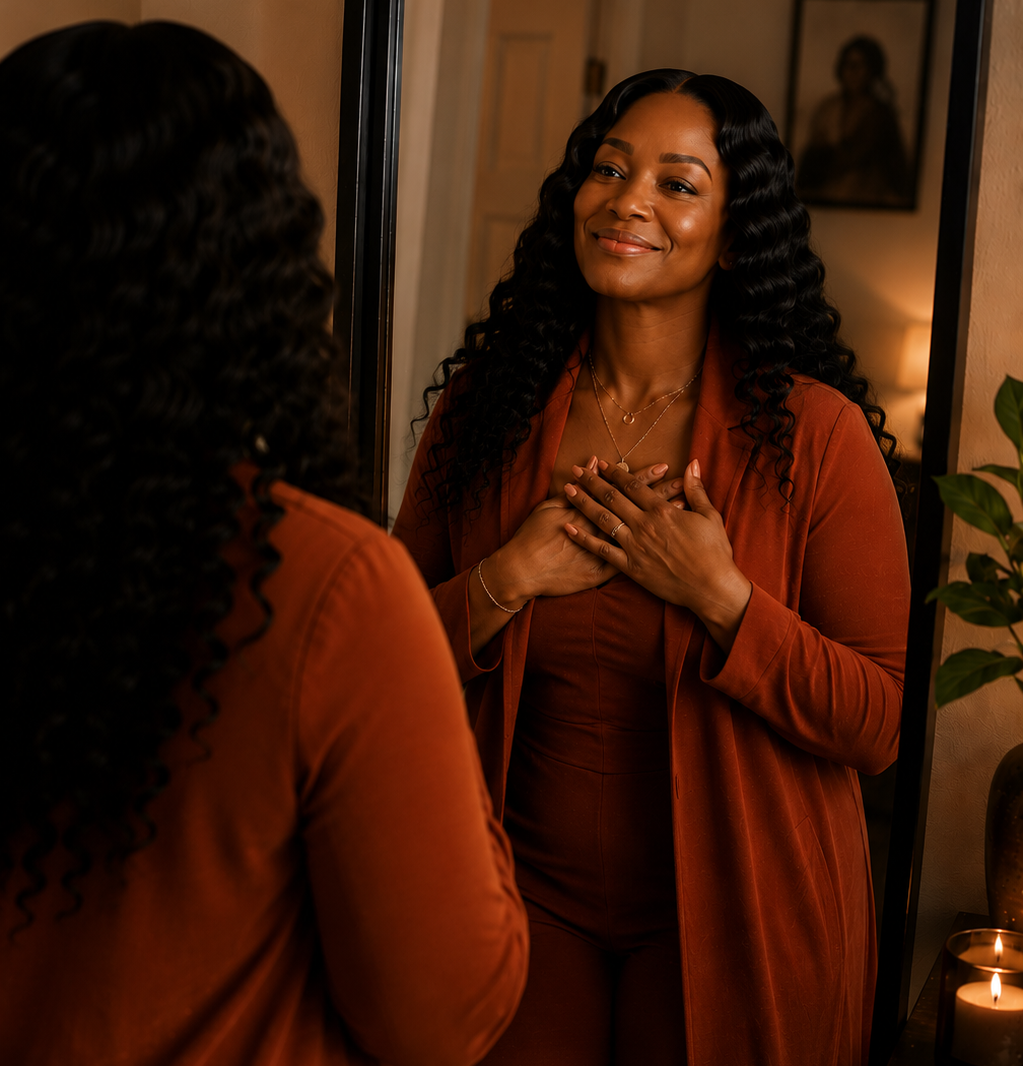
Choosing ourselves doesn't make us cold, heartless, or selfish...
I think it makes us more aware of and honest about what we offer and require, which allows us to choose healthier, better-aligned relationships. It means we get to outgrow patterns that only knew how to hold the version of us who didn't, and perhaps couldn't, show up fully.
Will the lesson knock on our doors again? Probably. But next time, we'll recognize it sooner, and we won't stay, because we know we deserve better.
Crowning Thoughts
May we stop returning to roles that only showed us love when we were useful.
May we disconnect from and grieve relationships that no longer fit.
May we choose ourselves before the lesson comes back to tempt us with the same ache in a different form.
And may we remember that we deserve the care, compassion, and empathy we often give.


Comments