
MHM Psychocultural Artist Series: Meet Singer Mary J. Obliged (The Overfunctioner)
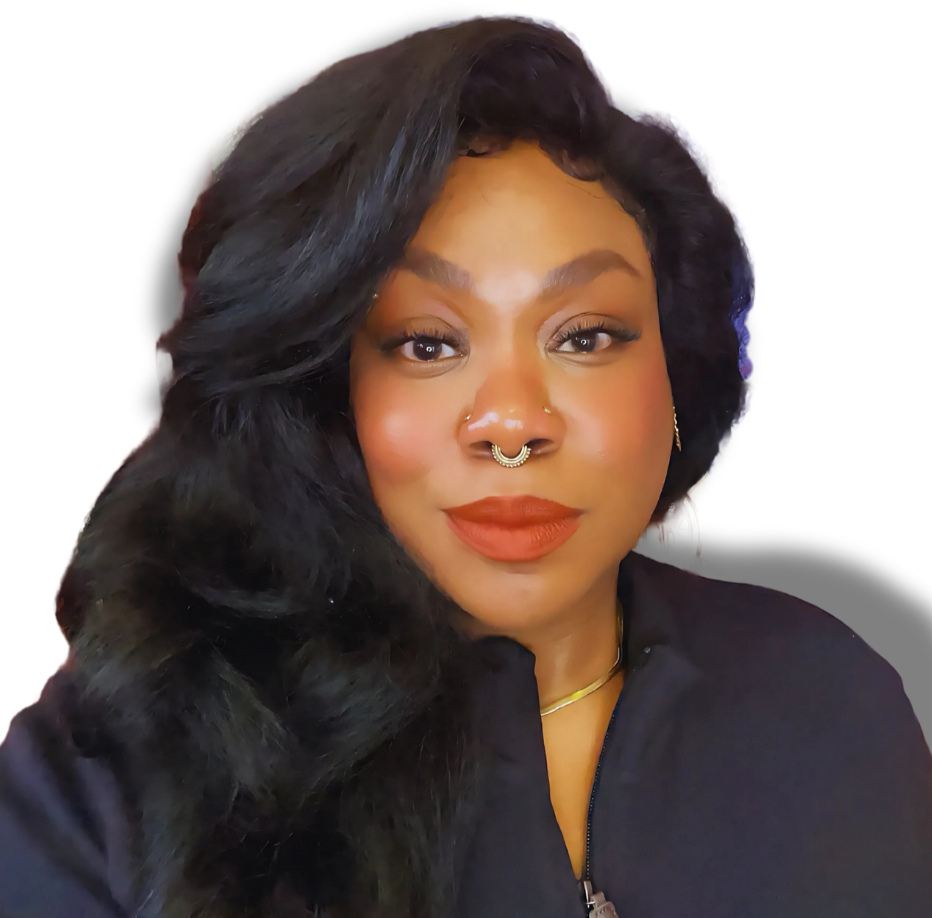
An Interview With A Universal Role In Many Interpersonal Relationships

Some people don't realize how much of their life has been organized around being useful until they get tired enough to notice it.
You may notice how often your phone rings when something has gone wrong. How many conversations begin with someone needing your opinion, your help, your time, your emotional bandwidth, your ability to figure out what everybody else seems perfectly comfortable handing over. You're the person who remembers what needs to happen next. You know who to call, you can calm people down long enough to make a plan, and you can usually find a way out of no way.
And because you can, people start assuming you always will.
That part can be hard to name because being dependable isn't inherently bad. A lot of us are proud of it. There is something noble about being trustworthy, capable, generous, and able to show up for the people we love. Sometimes it feels good to know that someone thinks, "Call her. She'll know what to do."
Until you start realizing how many people know what you can do for them and how few seem curious about what it all costs you.
That's where Mary J. Obliged comes from.
Mary is the newest character in the Mental Health Monarchs® Psychocultural Artist Series, and she represents a role many people have lived long before they ever had language for it: the overfunctioner. The person who routinely does more than her share of the thinking, planning, fixing, carrying, anticipating, smoothing over, following up, and holding things together in her relationships.
Her debut song, "Everybody Calls Me," starts there. Listen below!
Mary doesn't hate being needed, which, if she did, would make it much easier. But Mary loves people. She likes being someone others can trust. She has built part of her identity around being capable, and a lot of that capability is real strength. The trouble is that strengths can become roles, and roles can quietly become expectations. After a while, everybody knowing you can handle it can turn into nobody stopping to ask whether you should have to.
Overfunctioning often survives because it works. Things get done, problems get solved, people get rescued from consequences, and relationships keep moving because someone is willing to supply whatever is missing. From the outside, the person doing all this work can look exceptionally strong. Inside the relationship, though, something else may be happening: one person becomes increasingly responsible for maintaining what supposedly belongs to everyone. And that arrangement can become so familiar that even the overfunctioner stops questioning it.
You answer because you always answer; you fix it because you know how. You step in because watching something fall apart feels harder than just handling it yourself. Maybe you learned early that being useful kept things calmer. Maybe competence earned you praise, closeness, safety, or a place in the family or relationship. Maybe no one explicitly told you that your value lived in what you could carry or do for people. They didn't have to. Sometimes a role is taught by what keeps getting handed to you.
Mary knows that life.
She also knows the strange resentment that can creep in when the very thing people admire about you becomes the reason they expect more from you. You can love being generous and still become exhausted by entitlement. You can be capable and still want someone else to notice what needs to be done. You can be the person everybody trusts and still wonder who you are allowed to fall apart with when you don't have an answer.
This contradiction is what interested me about the role.
The goal isn't to turn capable people into people who stop caring; it isn't to make generosity suspicious, or even to convince ourselves that every request is exploitation. The deeper question is what happens when care loses its choice and helping becomes automatic, when responsibility keeps sliding toward the person least likely to let something drop, or when your relationships begin depending on a version of you who is always willing to do more.
At some point, the strong one has to be allowed to become a whole person again.
Mary J. Obliged is still figuring out what that means.
So before we start telling her what boundaries she needs, who she should stop answering, or why she keeps ending up in relationships where she is doing entirely too damn much, I thought we should hear from Mary herself.
We talked about "Everybody Calls Me," how she became the person everybody seems to call, what she genuinely loves about being dependable, what she has begun to resent, and what happens when being "the one who can handle it" stops feeling like a compliment and starts feeling like an assignment.

MEET MARY J. OBLIGED
Mental Health Monarchs® sits down with the newest voice in the MHM Psychocultural Artist Series
MHM: We have to start with the obvious. How does somebody become Mary J. Obliged?
MARY J. OBLIGED: Slowly. [laughs] That's the part people miss...
I wasn't walking around thinking I didn't deserve anything. I liked myself. I was confident. I could make decisions. I could speak up. I had opinions--plenty of 'em!
But I learned pretty early that helping people kept me connected to them.
If I could make something easier, fix something, remember what you needed, show up when things went left…there was a place for me. I mattered in the room. And when you learn that young enough, you don't necessarily call it people-pleasing. You just think, this is how we love people.
Especially because I watched women in my family do it all the time.
They cooked, remembered birthdays, loaned money, took people in, kept secrets, checked on everybody, smoothed things over, and knew who needed what before they even asked.
Nobody called it overfunctioning. That was just a regular Tuesday.
So I thought being a good woman meant you kept a little extra of yourself available for everybody else.
MHM: When did you realize something about that wasn't working anymore?
MARY: It took me longer than you would think because, for a long time, it did work...
People loved having me around. [laughs]
I was dependable. I cared. And I genuinely like helping people, so I wasn't sitting somewhere secretly keeping score every time I did something.
What changed was the expectation. There's a difference between somebody appreciating your care and somebody automatically expecting you to do something for them (without reciprocation, by the way). That feels different.
At some point, people started commanding my labor versus showing appreciation for it.
"Thank you" shifted into silence, and it started to piss me off! Entitlement is one of my pet peeves. I don't owe you sh*t! TF?
MHM: Was there one moment when it really clicked?
MARY: Yesssss...
And it wasn't really that dramatic, at all. I needed something, myself. That's it.
I had something going on in my own life, and for once I was the one looking around thinking, 'okay…who can I call?' So I started mentally going through people and reaching out to those that I'd helped a hundred times over, but it was like this one had something going on, that one couldn't do it, somebody else didn't even answer, and another person was suddenly very overwhelmed and unsure. Everybody had a reason, and individually, most of the reasons were probably legitimate, but I had often overridden those same reasons myself to show up for them, so I had to sit with that.
Because I knew exactly what I would have done if any of those same people had called me. And that was the first time I really saw the arrangement.
I had spent years becoming someone everybody could call, but when I needed somebody, I ended up having to rely on myself again. For some reason, it didn't really hit me until then. I don't do things just to secure my future needs if I have them, but if "an even swap ain't no swindle," like the old folks say, where was my swap? I realized there was no reciprocation happening.
MHM: Whew. What did that bring up for you?
MARY: First? Irritation... [laughs]
I was pissed. Then I was hurt.
But after that, I got curious because I realized I had participated in building some of these relationships this way.
Not because I asked people to use me. I didn't.
But I had been so willing to occupy the helper role that sometimes people never had to discover anything else about what being in relationship with me required.
I knew their needs. They knew my usefulness. That was the extent of the relationship(s), and that bothered me. I had no requirements or standards that I made clear. And I was like WHOA. I show up this way in most of my relationships. I silence the discomfort I feel or I overlook the sly remark. I just keep going without saying anything, and honestly, it was because I didn't know that I could. I thouth this is what you do when you care about people.
MHM: Is that when you started thinking about people-pleasing differently?
MARY: Yeah, because "people-pleaser" used to sound like somebody scared to say no to everything...
That wasn't me. I could say no.
What I didn't understand was how often I was saying yes because being needed gave me a sense of belonging.
I wasn't always trying to make people happy. Sometimes I was making myself necessary.
There's a difference.
And once I saw that? Lordt! Now I had some business to attend to.

MHM: You've mentioned therapy being part of that process.
MARY: Oh yes. I went and talked to "the lady..." [laughs]
Listen, eventually you get tired of having the same revelation in different relationships and circumstances, and you don't really know what to do about them because the people around you don't have answers and you need more than "just pray about it." I've been praying!
I just kept running into different relationships, but I was playing the same role, and I kept getting the same results. I was like, "hol' up."
If I keep running into the same situation with different folks, then WTF is happening? Is it me!? That was hard to swallow because I seriously thought I was genuinely being a good person. And I think I was (a good person), it was just...the sh*t wasn't working and I was getting tired of it.
At some point I had to admit that changing the cast wasn't changing the story.
Therapy helped me see why being useful felt so connected to being loved, but it also helped me see what happened when I started changing.
Because when I stopped automatically doing what people expected, some relationships faded TF out. It got interesting when my needs came to the surface, and I was able to share them and ask for what I needed too. Then folks got real finicky.
MHM: Interesting. How did things get finicky?
MARY: People got quiet. Stand-offish. [laughs]
It got real quiet.
Once I started expecting reciprocity--not perfection, just reciprocity--I was surprised by how many people seemed confused by the request.
I started asking myself what I wanted from relationships instead of only asking what role I could play in someone else's life:
Do I enjoy you?
Do you know me?
Can I need something here?
Are you curious about my life too?
Do I feel safe here?
Can I disappoint you by saying no and the relationship stands?
Can I say, "I don't have it today," and we still have a relationship tomorrow?
Can I have needs alongside yours and they are equally held as important?
Those questions changed things for me.
And yes, some people fell TF off!
At first, I took that personally, but then my therapist helped me understand something I probably already knew but wasn't ready to live yet: everybody who is comfortable with one version of you won't be interested in meeting the version of you that requires more from the relationship.
And I had a choice.
I could keep going back to the same people, accepting the same role, and wondering why I felt the same way.
Or I could stop helping everybody recreate the version of me I was trying to outgrow.
MHM: Was that lonely?
MARY: Sometimes...But you know what was lonelier?
Being surrounded by people and realizing the main thing connecting us was what I did for them.
That'll sober you right on up. QUICK.
I think that was the season when I really understood that belonging and usefulness are not the same thing, and I confused 'em because they had traveled together for so long in my life--especially considering what I'd seen. Think about it. Who actually took care of the person that you saw taking care of everybody?
MHM: So what happened to all that energy you used to pour into everybody else?
MARY: I started spending some of it at home...On me.
And yes, I felt guilty at first, which I think is normal considering it was my norm to overfunction. I'd be resting and suddenly think about something I could be doing for somebody. I'd have some extra money and immediately think about who might need something. I'd have an open Saturday and feel that little pull to fill it with showing up for somebody else's situation.
Then one day I thought, Girl, if you don't leave that Saturday alone! [laughs] Go enjoy YOURSELF.
I had to learn that caring for myself didn't mean I stopped caring about everybody else.
I was just finally included in the "everybody." I'm the people too!
And really, as my therapist says, "Who else is going to do it?" Meaning, who else is going to care for you in a way that only YOU can? Not that other people can't care for us, but you are the only person who knows exactly what you need, and you can't wait for others to "get it" before you are allowed to feel okay because you might be waiting FOREVER! I learned that truth from my therapist.
Real talk...I always wonder how her life and relationships look, but she shares parts of her learning that make 'putting myself first' hit harder when I experience things for myself. I often remember the lessons she shared with me and why they matter. Her life seems hard, honestly. It's crazy how she can still show up for me and teach me things she likely wished someone would've taught her. I imagine that's difficult, but I dunno. That's craaaazy.
MHM: Do you still help people?
MARY: Absolutely. That's part of who I am...
I didn't become cold, but I became more discerning.
Now I want my generosity to come from an internal desire, not a learned role or fear, obligation, or a quiet belief that I have to keep earning my seat in the room.
I can love you and still notice whether you love me in a way I can actually feel and see outside of my function in the relationship. Do you SEE ME?
I can help you without becoming your whole infrastructure.
I can show up without abandoning myself on the way there.
That's different from how I acted before.
MHM: So is that what the "Obliged" means now?
MARY: It means I know her...The woman who felt obliged...
The woman who thought love came with assignments, the woman who could handle everybody's sh*t and still show up looking like she had gotten eight hours of sleep.
[laughs]
I'm not ashamed of her. She kept me connected when connection mattered.
She just didn't know the arrangement was negotiable, but I know that now.
And once I started putting some of that loyalty, labor, attention, and care back into my own life, some things shifted.
I stopped asking, Who needs me? I started asking, What do I need? What do I want? Who actually meets me here? That question will clear a room, for real. And it's not selfish, because it brings you into the equation, too. It asks, 'Who can meet me in a relationship in a way that benefits BOTH of us' (not just them).
Now, I can make room for folks who can care for me in return...not just me spinning my wheels at my own expense for love or acceptance.
These days, I'm much more interested in that.
Right now, mutually beneficial relationships are a requirement in my life moving forward. No CAP.


Comments