
The Emotional Dinosaur: When “There Are Two Sides to Every Story” Really Means “I Already Picked A Side."
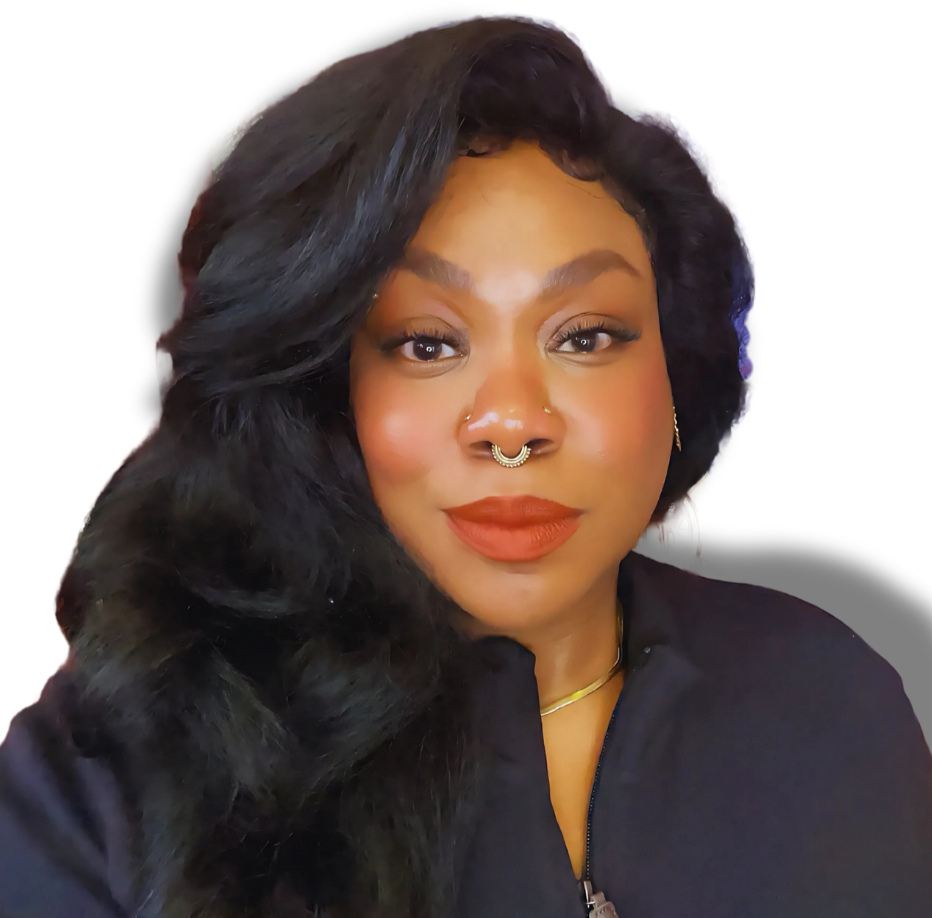

Okay, boom.
So, I called my Sunday before last for ONE thing. I wanted her to give my cousin my phone number.
That’s it, and that’s all. My cousin and I grew up together; I’d been thinking about her, and I wanted to talk to her. I wasn’t calling my aunt to revisit my childhood, discuss my mother, explain why I had distanced myself from my mom, or submit my life for a freaking family review.
I wanted my cousin to have my number. Simple, right?
She asked how I was doing. My mother had died, and grief had started doing what grief does. The funeral had passed. I knew my mom was dead (kinda), but what had started settling into me differently was that the relationship was finished too. Finito! No future version of my mother was coming to explain what I had spent most of my life trying to understand. Whatever our relationship had been, which was complicated, painful, loving, confusing, and mostly adversarial, that was now the whole story that closed itself out. There were no revisions coming. There was no future possibility for repair, even if part of me had already believed repair probably wasn’t possible. As long as she was alive, “one day” had remained somewhere in the room.
So, I answered honestly, like a woman whose mother had recently died. I simply responded, “Some days are better than others,” and I explained how the finality hit me and how the opportunity for repair was now completely gone.
That was apparently my first mistake, because somewhere in there, the conversation stopped being about what I was experiencing and became my aunt explaining my experience back to me.
She had thoughts about what I really felt. She was certain it was "guilt."
Excuse me?
Mind you, I don’t carry a sense of regret or guilt about distancing myself from my mother AT ALL.
So, imagine me, standing in my own house, holding my own phone, listening to a woman who has barely spent meaningful time with me since I was a child tell me what I was really feeling.
Then my relationship with my adult daughter got pulled into it. Then the fact that I am a therapist entered the conversation, as though my profession should have produced some superior version of me who meets family dysfunction with endless understanding and a smile.
This woman, who barely knows me, was so sure of herself.
That's what got me tight. Not the disagreement (because people disagree). It was the math (that wasn’t mathing). She had very little firsthand knowledge of me, but a whole lot of certainty and unmitigated gall. This woman has not watched me become who I am or spent enough ordinary time around me to know much of anything about the life she had suddenly become such an expert on. She wasn't hearing me. She was measuring me against a description she already walked in with.
It took me until after the call to name who or what I had been talking to.
An emotional dinosaur.

An emotional dinosaur is someone whose understanding of you stopped updating. They definitely got the story about you secondhand. In my case, it was surely inherited from a family narrative my mother started. The emotional dinosaur seems to have decided who I was thirty years ago and simply never bothered to fact-check. New evidence arrives, firsthand information arrives, the actual person walks into the room contradicting the whole narrative, and somehow the old conclusion still survives?
Emotional dinosaurs are audacious and fascinating creatures to observe, but they make terrible company.
You probably know one.
The uncle who still introduces you as the wild one two decades after you stopped being wild. The cousin who repeats something about you she heard from someone else and has never asked you whether it happened. The family friend who greets you with a version of yourself you retired before your kids were born.
Sometimes the problem is not that they need more information. They decided who you were a long time ago and never bothered to reopen the file.
Obviously, my file had been closed since before I was grown. And a phone call about giving my cousin my number cracked my file open regarding a question I had never quite known how to ask:
How many people in my family knew my mother's version of me before they ever bothered to know me for themselves?
My mother taught me not to tell while she was apparently telling
My mother is the person who taught me, "Don't go telling what goes on in this house."
I imagine this message was not unusual where I came from. Plenty of Black children learn some version of 'what happens in this house stays in this house' long before we understand what family secrecy actually protects. Spoiler alert: it's frequently NOT the child.
I learned that family business was private. I learned not to 'embarrass' my mother. I learned that telling someone outside the house what happened inside the house could somehow become a bigger offense than whatever happened inside of it. Eventually, nobody has to remind you of the rule. It gets baked in.
So, I learned not to tell anyone what I was living through.
Meanwhile, my mother was apparently talking, which means the rule was never meant for her. It's giving "controlling the narrative," but I digress.
What happened to me belonged inside the house. However, her grievances about me apparently had clearance to travel outside. She could describe my behavior, my attitude, or whatever she believed was wrong with me, and those stories quietly became part of how other people understood who I was without my input.
That is how a family file gets written. One person holds the pen, and the person being described is taught that picking up a pen of her own is a betrayal. See the contradiction?
If people hear for years that a child is difficult, disrespectful, angry, ungrateful, or whatever version of "the problem" made sense to the storyteller, then by the time that child finally says, "This is what I experienced," she is already starting behind the line. She is telling her story to people who were handed a framework for dismissing her before she even opened her mouth.
"You know how she is."
That sentence can do tremendous damage without anybody ever saying it directly. See how that works?
And now, knowing that my mother had a serious mental illness she never discussed with me, I can't help but wonder what all her talking was doing for her. She is gone, and I cannot ask her (not that she would've told me anyway), but maybe describing me as a difficult daughter helped her make sense of conflicts she genuinely experienced as something I was doing to her.
I don't know.
But I can look at what the arrangement accomplished.
I understand that Black families from certain generations have not always known what to do with mental illness besides keep it quiet and keep it moving. The shame was real. But I needed enough truth to understand my own life, and I am only now realizing how angry I am that I was expected to protect the privacy of an experience nobody was protecting me from.
2014 was the first time the story broke in the right direction
My mother showed up at my house having one of "the episodes" I had experienced in different forms my whole life. She accused me of doing something sinister, and she was absolutely convinced it was real. Normally, that would have pulled me into defending, explaining, or trying to prove what I had or hadn't done while she stayed certain her version was the TRUTH.
Except this time there was a problem with the accusation.
I hadn't been around her. I hadn't even been to her place.
For the first time in my life, I had evidence that existed completely outside my mother's perception of me.
That was the light bulb moment.
Something is seriously going on with my mother.
That may sound obvious now, but it was not obvious to me then. I had spent my entire life inside the dysfunctional relationship. I always suspected something was off, but I had no knowledge of a diagnosis. I just knew my mother could become convinced of things about me, and then I had to survive the conviction.
That is very different from understanding that someone may be having a psychiatric episode.
So I did what made sense. I called "family." [insert eye-roll here]
I called one aunt and told her what was happening. Her response was essentially:
Are you sure you didn't do anything?
That question disgusts me every time I think about it. I was a grown woman saying, "My mom has shown up at my house accusing me of something I know for a fact did not happen, and something is wrong."
And still, the reflex was to check me.
I also called my other aunt, the emotional dinosaur who would eventually inspire this essay. I left a voicemail telling her something was wrong with my mother. I don't remember every word, but I remember why I called. I reached out to my mother's family because I assumed they might know something I didn't, or they might know what to do.
The emotional dinosaur never called me back.
That was 2014. No follow-up. No 'What happened with your mom?' No 'Is she okay? No Are you okay?
N O T H I N G .

Looking back, that voicemail feels like the perfect artifact of the whole problem: new information arrived, and she simply never picked it up.
Because twelve years later, that same woman can sit on the phone with plenty of thoughts about me and my relationship with my mother, question my choices, and then tell me that "There are two sides to every story" while never hearing mine.
If she had ever even considered my side, it was sitting right there in her voicemail in 2014.
She just never called back.
Until that day, my mother's certainty had always dragged me into some level of self-questioning. Maybe I was too defensive. Maybe if I explained myself better, stayed calmer, tried harder, the conflict would finally make sense.
But that day there was nothing for me to explain or defend, and a question I had spent years pointing at myself finally turned around.
What if the problem was not always me?
Two drawers, and nobody thought to open them at the same time
Later, I drove to another family member's house for more help. This person had previous experiences with my mother that resembled mine. As we talked, new information started surfacing. Through what he learned from another aunt, rest her soul, I eventually learned about my mother's diagnosis.
Pieces of my life started to make more sense.
The diagnosis did not magically explain everything about my mother. Mental illness does not erase someone's personality, choices, or responsibility for how they affect people. My mother could have a mental illness and still accurately perceive some things. In fact, she was often very sharp. But she could also experience things that had no connection to what was actually happening, especially during those "episodes."
Both can be true.
Which is exactly why knowing there was a diagnosis would have mattered so much to the child (and later, the adult) who kept getting accused of things without understanding why.
Then recently, the aunt who asked me whether I was sure I hadn't done anything in 2014, told me, very matter-of-factly, that my mother acted like that when she didn't take her medicine.
I'm sorry. What!?
We were sitting in my mother's nearly empty apartment days after her funeral. That sentence landed in the middle of the room, and suddenly I moved way past 'maybe nobody knew.'
So, you knew there was medicine; you knew there was a pattern? So, when I called you in 2014 because my mother showed up at my house accusing me of something I could not possibly have done, you were holding information that could have helped me understand what was happening?
And what made it into the conversation instead was, "Are you sure you didn't do anything?"
Bih!
If you know someone has a serious mental illness that can affect her behavior and her perception, how do you receive decades of information from that same person about the child she is in chronic conflict with and never once think, I wonder what is happening on the other side of this relationship?
The lack of deductive reasoning bothers me almost as much as the emotional failure itself.
I'm not saying everyone should have automatically disbelieved my mother. That would be just as intellectually lazy.
I'm saying the diagnosis should have complicated the certainty.
Her mental illness was stored in one drawer while her story about me got stored in another. And nobody thought to open both drawers at the same damn time? TF?
My mother had episodes significant enough that relatives could describe what she did off her medicine, while her perceptions of me still circulated through the family like neutral reports from an unaffected observer. How, Sway?
Her illness could provide context for her, but somehow no one wondered what living inside the effects of that illness might have been doing to me behind closed doors.
That's the part that makes me angry for the younger me in a way I am still learning how to hold.
The adults had information. I had consequences.
I wasn't a difficult child. I was hard to override or control.
There is a difference between a child who can be difficult and a child who becomes the reason everything is difficult.
The family file cast me as the second one.
I was a child. Sure, I got smart-mouthed sometimes, and I probably slammed a door or twelve. I'm sure my mother had legitimate reasons to correct me on several occasions. I'm not a blameless martyr. However, being cast as "difficult" for normal developmental behavior is unfair.
When I look back, I don't see a child who was difficult. I see a child who was hard to override. That's not the same thing.
I was bold. I questioned things. I had an internal line I could feel before I had sophisticated language for it, and when someone crossed it, I reacted. Sometimes loudly, sometimes imperfectly. I was so observant it became hypervigilance, which was necessary in the environment. I had opinions, and I refused to silence myself at home, even though I had been taught to silence myself outside of it.
I could respect authority, but authority that misused the power imbalance? Nah. I'm not staying silent about that. I did not allow myself to be bullied or unfairly accused or mistreated. Authority needed compassion, and it still had to make sense to me. My experiences in my home never made sense to me.
That kind of child can become inconvenient in a family system where peace depends on compliance, silence, or pretending something is fine when it isn’t.
So, what if some of what my mother interpreted as evidence that I was 'problematic' was actually a child responding to an environment she did not fully understand? What if I defended myself so fiercely because I had already learned that if I didn't, nobody else would?
I was doing a job nobody else was doing. I was taking care of myself emotionally, and I was trying to keep my reality attached to me.
Whatever qualities made it into the family file as defects were also qualities that helped me survive without losing my damn mind. I am no pushover. I notice when something feels wrong. I chose to stand up for myself on many occassions. And plenty of times in my adult life, these same qualities have helped me leave situations and people that were harmful.
The rules kept changing, but somehow I stayed guilty
Here is what I finally understood about the closed file about me. It doesn't need consistent logic to function, because no matter what, the verdict is the same. I'm to blame.
The emotional dinosaur demonstrated this faulty function several times in one conversation.
When we talked about my relationship with my mother, I was apparently to blame because I was the daughter. Why had I distanced myself? Why wasn't I there? Why hadn't I handled things differently?
Then she brought up my relationship with my own adult daughter, and suddenly I was still to blame, but now because I was the mother.
Hold on. Which one is it?
If daughters are responsible for maintaining relationships with their mothers, that logic should apply across the board. If mothers are responsible for repairing relationships with their daughters, someone should have had a very different conversation with my mother while she was alive.
Then came, Well, "there are two sides to every story."

I actually agree that there are two sides to every story. Of course there are. People remember differently. People protect themselves. People interpret the same moment through whatever fear, shame, loyalty, or hurt they're carrying. I don't need my mother to have been wrong about every single thing she ever said about me to understand that her version was still only her version.
My question is: where was all this devotion to nuance while my mother was talking?
There was enough information floating around this family to form opinions about me, but somehow there wasn't enough curiosity to go find the person those opinions were about.
Then, when I start talking, suddenly everyone discovers fairness? There are two sides, but now we have to be careful because my mom isn't here to defend herself?
Do you hear yourself?
My mother had years to smear me while I wasn't there to defend myself. Nobody seemed particularly troubled by my absence then. Now she's dead, and her absence still works in her favor?
Then my profession entered the conversation.
Apparently, because I'm a therapist, I should be endlessly patient with harmful behavior in my personal life, more forgiving, more accommodating, less angry, less affected, and more willing to stay in relationships that harm me.
HELL NAH.
Yes, I am a therapist, and part of what makes me a great one is everything I have been through, and part of it is knowing that understanding why someone behaves the way they do is not the same as granting them unlimited access to keep hurting you. I can recognize trauma, mental illness, attachment wounds, fear, shame, all of it, and still decide I don't want destructive behavior anywhere near me.
Sometimes understanding the pattern is exactly why I stop participating in it (especially when there is no growth involved).
Therapists clock out like everyone else with a profession. I do not come home and suddenly graduate from humanity because I have credentials next to my name.
And notice the title only travels one direction. No one has ever said, "Since you're a therapist and you've spent years studying psychology and human behavior, maybe you understand something about this dynamic I should listen to." The fact that neither one of my aunts has been to therapy, and may not even understand what therapy requires, is relevant too.
But since the emotional dinosaur decided titles were relevant, so is hers.
She is a Christian minister.
So, if being a therapist required something special of me, what exactly does being a woman of GAWD require of her?
Curiosity, maybe? Humility? Hell, what about good old-fashioned empathy?
Different rules, same verdict. I was still the problem.
And then there's the fact that I distanced myself from my mother over a year before she died. If I had truly been such a problem for her, my distance should have been a blessing, right? The difficult daughter is gone. Peace at last!
Except somehow leaving became another thing I had done wrong. At some point, you have to notice when the rules are not actually rules. They are routes back to the same conclusion.
At My Mother's Funeral, Even My Grief Was Misread
The emotional dinosaur had already shown me the lens she was looking through, and I didn't fully recognize it, at the time. I just knew something about the energy felt off.
I was sitting in the front row of the church, looking at my mother's white casket while a woman sang a sad-ass song beautifully. I cried.
That should not require a deep analysis. My mother was dead. I was grieving someone I loved, someone who had continuously hurt me throughout my life, someone whom I would never see again. My grief already had enough to contend with without someone assigning it an ulterior motive.
My friend came up to the front pew and sat beside me when I became emotional. I laid my head on her shoulder as she wrapped her arm around me. The emotional dinosaur got up from her seat in the same front row, stepped in, moved my friend aside, and said something like, "We got her."
During our recent phone conversation, I found out that the emotional dinosaur believed I had been trying to "steal the show for attention."
At my mother's funeral.
Every time I think about that statement, I want to punch the air, because the accusation is so damn unintelligent.
What show? Who was I competing with? Was I supposed to wait for an intermission before crying?
What made the moment more revealing was that she had already seen me at my mother's viewing and had barely spoken to me. But the moment my grief became visible at the funeral, she stepped into the "caretaking role" and then assigned an ugly motive to the very emotion she supposedly stepped in to soothe?
Disgusting.
That is a closed file doing its work in real time. I couldn't simply be grieving; I had to be seeking attention. I couldn't distance myself because a relationship had been consistently harmful to me; I had to be abandoning my mother. I couldn't tell the emotional dinosaur what I felt and have that feeling remain mine. She decided I felt guilt when guilt was nowhere on my radar. Apparently, guilt was what she needed to make the story about me make sense.
I spent years telling my mother what I felt and hearing back what I supposedly really felt. Then I found myself on the phone with her sister, watching the same unhealthy dynamic happen.
Different woman. Same irritating, invalidating experience. Same old habit of rewriting me.

Maybe I didn't lose the relationships I thought I lost.
For a while, the most painful part of all this was thinking about what my mother's slander might have cost me. What relationships might I have had if people had known me without her filter? What if they had heard about my positive qualities and accomplishments with the same enthusiasm they apparently heard about my shortcomings, real or fabricated? There is grief in those questions, and probably will always be.
But this recent conversation changed the question for me.
My mother is dead. She is no longer here shaping what these relatives think of me, even though much of the damage has already been done. These are grown women. They can ask questions. They can reconsider what they were told. They can decide that maybe they knew one version of a complicated relationship and never bothered to learn the other.
Look at what they're doing with that opportunity, though.
One aunt knew enough about my mother's mental illness to describe how she behaved off her medicine, yet when I called her in confusion, her first instinct was to ask whether I had caused the problem. The emotional dinosaur received a voicemail from me in 2014 saying something was seriously wrong with my mother, never called me back, and twelve years later felt comfortable evaluating my decisions about the same relationship.
So, at some point I have to stop blaming my mother for every relationship that never developed after her version of me entered the room. These women have agency too.
And I am increasingly wondering whether I have been calling some of these relationships "mine" simply because they were my mother's family. Sharing relatives is not the same thing as building a relationship. If someone's primary understanding of me came through my mother, their loyalty remained primarily with her, and they never invested enough curiosity to know me independently, then perhaps I am grieving relationships that never had much room to become mine in the first place.
That changes the loss.
Because what exactly did I miss? More years of explaining myself? More invalidating me? More rules changing every time I might finally be released from blame?
I almost called the emotional dinosaur back the next day because I wanted to say my piece. I thought about sending a voice note so I could finish without her interrupting me. Then I caught what I was preparing to do: offer another defense, another explanation, another argument for why my own experience deserved to be considered. I got tired just thinking about it.
For years I thought being misunderstood meant I needed to explain myself better. Now I know that sometimes a person simply doesn't have the range, curiosity, or willingness to know you beyond the story they were told.
That is information too.
You may have been holding someone's face in mind while reading this. Maybe you have your own emotional dinosaur.
So here is a question worth sitting with:
How long have you been submitting evidence to people who cannot—or will not— update their understanding of you?
I'm not going to tell you to cut anyone off. That decision belongs to your life. But there does come a point when you realize you are submitting exhibits A through Z to a family court that already decided your verdict.
I can watch the loading wheel spin only so long before I decide I have better things to do with my time.
Emotional dinosaurs are fascinating to observe. I mean that. You can study the rigid thinking, the old family rules, and the astonishing confidence of someone standing on seventy-year-old emotional software convinced she's running the latest model.

They rarely say, "You know what? I may not know enough about this." That would require an update. Instead, they speak with the authority of firsthand experience while standing on a pile of thrifted information. The emotional dinosaur is still clutching WHAT I HEARD to her chest like sacred text, already accepted and apparently beyond peer review.
At some point, I have to call it what it is: poor reasoning.
And the confidence is what gets me tight. My God, the confidence of being LOUD and WRONG.
Can you think for yourself or nah?
There are things I wish I could ask my mother. That is now impossible, and it hurts. There are things I could say to the emotional dinosaur that I no longer care enough to say. So, I am now accepting applications for replacement aunts with emotional intelligence, critical thought, and updated software. Benefits negotiable.
But here's what I'm not going to do: I'm not climbing into the animal enclosure to convince an emotional dinosaur of a damn thing.
She can keep WHAT SHE HEARD.
I know what I lived.
THE MHM VIBE SOUNDTRACK:
Love Comes & Goes (Soulfreakah Remix)
MeloJaney & Soulfreakah


Comments